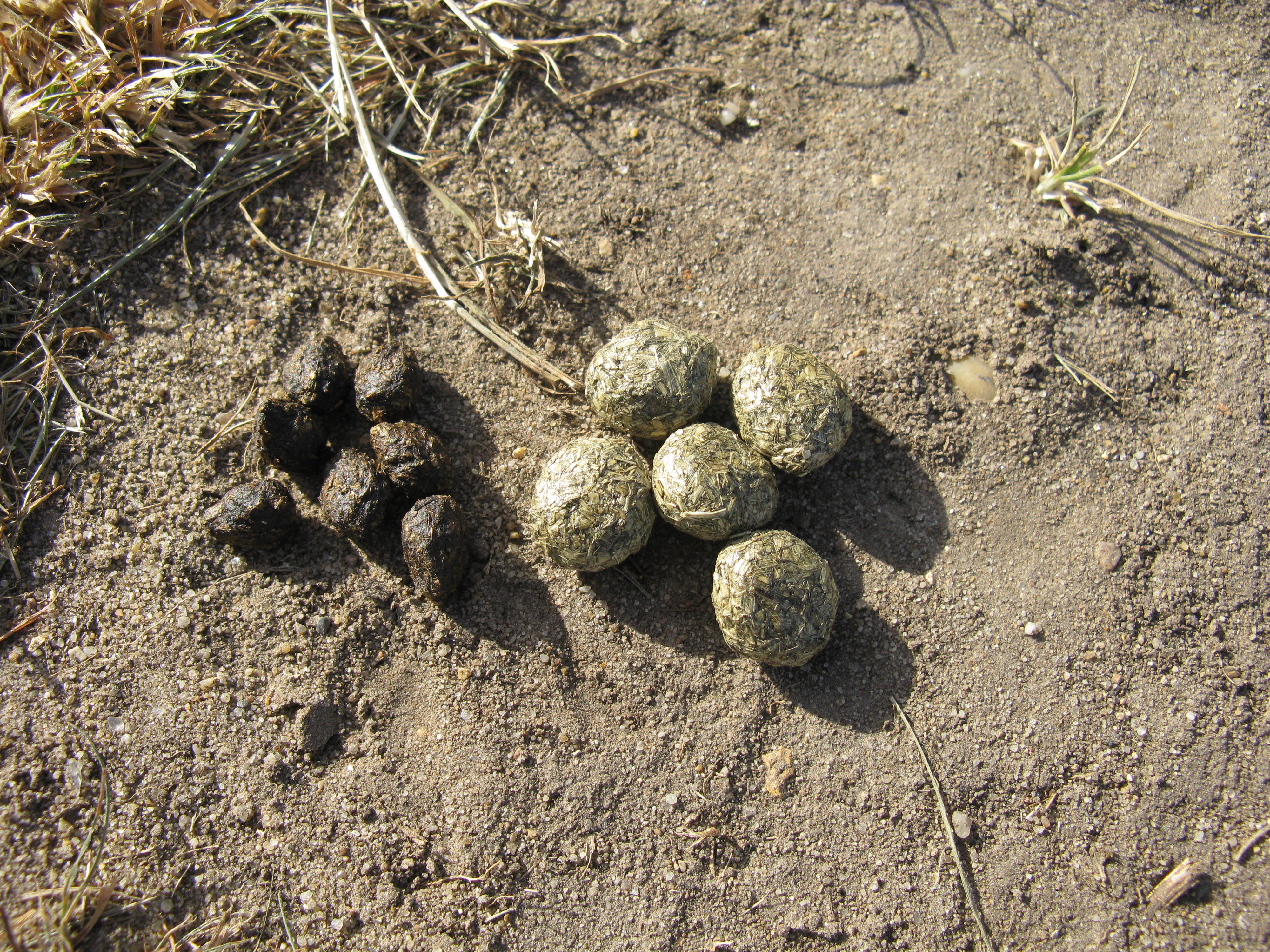
It seems we have discussed toiletry remains recently, but in the context of how more “modern”
authors with their emphasis on brutalism readily describe matters left unsaid by more cultured authors. (Mario Puzo’s description of Michael Corleone’s bathroom break before his execution of Sollozzo and McCluskey comes to mind.) As a tracker himself, I expect
Aragorn required the Company of
the Ring to bury their leavings, though as Merroe points out, that would not have prevented
wolves or
dogs from following and finding them, nor presumably tracker
orcs had any been in the neighborhood.
The
Wargs that attacked the Company in Eregion in a ring of stones (which I presume, without evidence, to have been the remains of the House of the Mírdain amongst the
ruins of Ost-in-Edhil) surely had no problems finding them! But these were not
natural wolves, not even the Wargs that Orcs rode as Wolfriders: they were something else, a necromantic
goeteia (black magic) of
Sauron’s, as
the Nine Walkers discovered the next morning:
When the full light of the morning came no signs of the wolves were to be found, and they looked in vain for the bodies of the dead. No trace of the fight remained but the charred
trees and the
arrows of
Legolas lying on the hill-top. All were undamaged save one of which only the point was left.
“It is as I feared,” said
Gandalf. “These were no ordinary wolves hunting for
food in the wilderness. …”
The
arrow from which only the point remained was the last Legolas loosed,
the one that caught fire as it flew before it struck and killed its target. These were werewolves of Sauron’s invention. One of Sauron’s monikers in the
First Age was “Lord of Werewolves”, and Tol Sirion where stood
Finrod’s
Minas Tirith (the original, First Age Tower of Guard) was renamed Tol-in-Gaurhoth, Isle of Werewolves, after Sauron seized it two years after
Dagor Bragollach, the Fourth Battle of
Beleriand.
The narration notes that the sky becomes very clear as the Company moves south, as soon as they reach
the old borders of Eregion. There were also, as Aragorn noticed, no
birds, and a brooding silence. As they climbed to the Redhorn Gate,
Gimli remarked that Sauron’s “arm has grown long if he can draw snow down from the North to trouble us here three hundred leagues away,” to which Gandalf answered, “His arm has grown long.”
As for the Orcs reported marching north past
Lórien toward
Moria, these were likely sent either by Sauron to reinforce the garrison in Moria, or by
Saruman to learn what befell there. In their chapter on “Departure of
Boromir” (for
Two Towers), Hammond and Scull in
Reader’s Companion cite
Tolkien’s notes that
Orc runners reached
Isengard in four days carrying news of the downfall of Gandalf and the
Balrog, while “
evil birds” carried the news to
Barad-dûr in only three days.
I argued for years that Moria was not a “trap,” but Tolkien says otherwise. In the remainder of his long
Letter 131 to Milton Waldman published in
Reader’s Companion, Tolkien writes,
There is a sense throughout of a hidden watch on their movements, a constant hostility of beasts and even inanimate things. The Company is driven to attempt the passage of the ominous Mines of Moria, and there Gandalf falls into an abyss in the act of saving them from a trap.
In “The Hunt for the Ring” part (ii), “Other Versions of the Story” from
Unfinished Tales, Tolkien’s notes on
Gollum indicate that the Orcs in Moria were
servants of Sauron, presumably put there by him to reinforce (and to spy on, I suppose) the Balrog there, of which in a footnote (number 11) he says,
“These [Orcs] were in fact not very numerous, it would seem; but sufficient to keep any intruders out, if not better armed or prepared than
Balin's company, and not in great numbers.”