• Welcome to The Tolkien Forum! Connect with fellow Tolkien enthusiasts and join a community that is over two decades old, and still going strong. We look forward to meeting you.  Register

What exactly are the Dreams of 🧝Elves?

LaurelinBearsFruit

Noontide of Valinor
Joined
Jul 16, 2023
Messages
585
This thought came to me as I have been doing my reread of the Trilogy these past few weeks, and it was also inspired by the thread created by @Mr.Underhill about if dreams/nightmares can have any practical/functional meaning in waking life.

The thought is... just what exactly are Elvish dreams? It is mentioned at multiple points throughout the Trilogy that Elves do not sleep and dream the same way that mortal races do. Tolkien goes so far as to try and explicitly express the strange nature of Elvish dreams, but he does so in a very poetic and non-literal way, so it is still difficult to determine exactly what is going on when Elves "sleep". It even seems clear that at some points, they can dream without sleeping.


From The Two Towers - Chapter II: The Riders of Rohan
Only Legolas still slept lightly as ever, his feet hardly seeming to press on the grass. Leaving no footprints as he passed; but in the waybread of the Elves he found all the sustenance that he needed, and he could sleep, if sleep it could be called be Men, resting his mind in the strange paths of elvish dreams, even as he walked open-eyed in the light of this world.

From The Two Towers - Chapter V: The White Rider
With that he fell asleep. Legolas already lay motionless, his fair hands folded upon his breast, his eyes unclosed, blending living night and deep dream, as is the way with Elves.


I know that Tolkien often withheld explicit explanations for many features of the living beings and metaphysical concepts within Arda, not wanting to explain away the mysterious and enigmatic elements of his world, but I still often wonder about this in particular. It is a very captivating subject to me, so I wonder: what are some of your thoughts on the nature of Elvish dreams and their obviously different mode of consciousness?
 
Well the sleep cycle we experience are divided into 4 parts and a part of it is deep sleep...I always thought that they don't experience this part in particular
But of course this is not based on Tolkien's writings ... just my own thoughts
 
Back in the thread (in our hallowed halls) titled Elven Bedrooms, I wrote:

I'll be interested to see if The Nature of Middle-Earth has more to say about Elves and sleep. In a letter to Mr. Britten [5 November 1956], Tolkien wrote: "it is plainly suggested that Elves do "sleep", but not in our mode, having a different relation to what we call "dreaming." Nothing very definite is said about it (a) because except at a length destructive of narrative it would be difficult to describe a different mode of consciousness, and (b) for reasons that you so rightly observe: something must be left not fully explained, and only suggested."

And now that NOME is out, so far -- as I've yet to read everything (!) in this book -- I found the following from JRRT [from a text in Knowledge And Memory]:

"But "dreaming" and sleeping" are to the Elves other than to Men. In sleep the body may, as in Men, cease from all activities (save those essential to life, such as breathing); or it may rest from this or that activity or function* as the fea directs. While it is so, the mind may seek repose also, and be utterly quiet, but it may be absored in its own activity: "thinking" -- that is, reasoning or remembering, or devising and designing; but these things are at will and of volition. The state that with the Elves nearest resembles human "dreaming" is when the mind is "feigning" or "devising".**

*
Thus an Elf may stand "asleep" with eyes wakeful, and yet hardly breathe, and with his ears closed to all sound."

**Though it is more aware and controlled than in Men, and is usually fully remembered (if the fea so desires)."

Earlier in the text, Tolkien noted that feigning refers primarily to the mind itself: "and is rather an exercise, or amusement, of the mind, independent of fact". Carl Hostetter notes that Tolkien's use of feign harkens back to a previous, primary and material sense (now obsolete) "to fashion, form, shape".

And that typed, I'm really looking forward to my nap today!
 
just what exactly are Elvish dreams?

So Elthir has graciously expressed, somewhat, the 'manner' of Elvish dreaming...interpretable in several ways.
Ent will now express WHAT the dreams are.

The blond elves dream of being brunette, and the brunette elves dream of being blond.

They all dream of 'days of yore' which were, of course, 'better than the present days' (which of course, they weren't.)

And they dream of streams, rivers, seas, wind and sky, trees, sun and moon. And peace and harmony.

Kind of like we do.
(Or so I would guess. Have no textual support for my thoughts.)
 
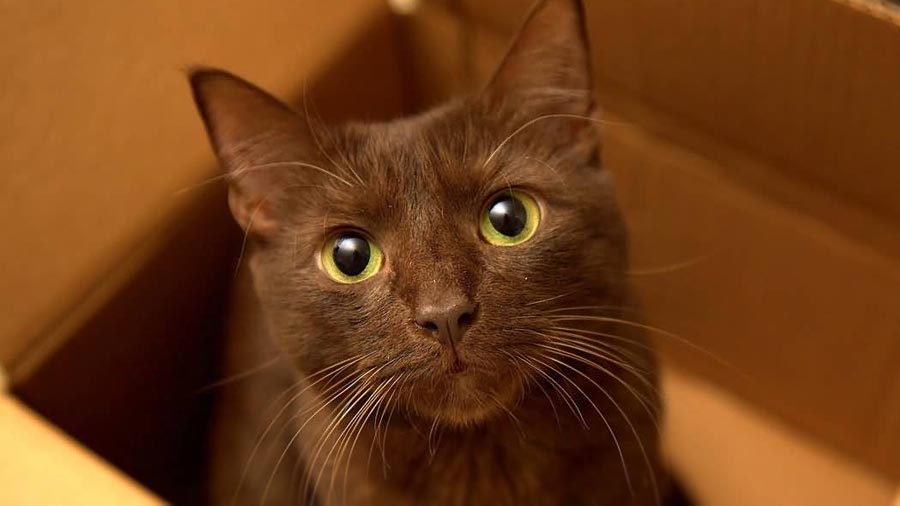
Pin on Cats
Havana Brown - Price, Personality, Lifespan
 
Very interesting input by all involved, so thank you for that! I would like to think that the dreams of any of the Calaquendi would be drawn to thoughts of the Blessed Realm and the Light that once was. The Moriquendi's thoughts, on the other hand, would surely be drawn to the thought of stars in the open skies of Beleriand before the coming of the Sun and Moon.

Also, I hope all those kitties receive lovely dreams (whether they be of Elvish or mortal variety).
 
@Old Ent All kidding aside, I do find it interesting just how preoccupied the Elves are as a rule about the past and keeping things from "decay." I read in a very interesting book, Death and Immortality in Middle-Earth, that the Elves perspective is one that is always drawn to the accomplishments and unspoiledness of previous Ages, and due to their immortality they see the passage of time itself as decay.

However, even in the Blessed Realm, which is free from the flow of time as we mortals know it, it is also resistant to change of any kind. As such, this is the main reason that they cannot quite have the ultimate freedom of will and fate that Men are allowed. And there is the fact that even the Blessed Realm and the works of the Vala are not entirely free from the concept of decay. Each time the works of the Elves and the Vala are destroyed, they can only create increasingly imperfect approximations of their original designs (i.e. Lamps to Trees to Sun/Moon) are they will never again be able equal their earliest accomplishments.

Disclaimer: I have not finished the aforementioned book, but that particular chapter was very interesting.
 
I do find it interesting just how preoccupied the Elves are as a rule about the past
And yet the Elves are not the only ones 'focused on the past', looking at it all as though it were the 'glory days of old', never to be recaptured. The men do much the same in some ways...though they're not 'stuck' there as the Elves are. And, if we move outside M-e, so does much of humanity. (Perhaps rightly so, in many ways.)

Tolkien did not get this concept from his mind. He got it from his 'real world' perspectives.

Of course, Melkor is the cause of all decay...matching Tolkien's M-e with his Catholic Christian perspective.
And just as Tolkien looked forward to the day when 'all things are made new' and returned to what they were meant to be, so is it Eru will ultimately restore all things to the way they were meant to be, the 'song being sung aright' (or however exactly it is said.)

Frodo, in some ways speaks to this, in his conversation with Gandalf outside the doors of Moria.

"I wish it need not have happened in my time" (frodo)
"So do I...and so do all who live to see such times. But that is not for them to decide. All we have to decide is what to do with the time that is given us."

From beginning to end, Tolkien has woven a web of what the various people are deciding to do with the time they have. How they will use it. How they will squander it. Whether they will seek to achieve anything, or just let the time go by. Whether they even consider time an important element of Creation to begin with.

The Elves (predominantly) yearn for what was, in spite of all their advanced years and supposed gained knowledge, not really seeking to move forward to what will eventually be.

The men (for the most part) always strove for the future... greater power, might, longer life, dominance, ultimately for some, the usual tyranny etc.

The Hobbits just wanted time to stand still so they could enjoy the here and now peacefully and let all the rest pass them by.

Orcs and other twisted creations of the discord had little concept of time, bent only on outlets for the hatred for everthing they developed given their slavery and misery. Therein was their 'relief'.

The twisted Maiar saw only the use of time their Master left them with... hanging onto his 'coattails' in his own desire to dominate in the present and control the future.

For all of them (as it is for us, if we stop to realize it), it's all a matter of how we decide to use the time given to us.

There are two Scripture passages clearly speaking to this I'm sure Tolkien was well aware of. Time is the only thing created beings are given by Eru to 'redeem'. All else must be redeemed by Eru (God).

Gandalf, in his comment to Frodo, alludes directly to these two passages.
 
Back in the thread (in our hallowed halls) titled Elven Bedrooms, I wrote:

I'll be interested to see if The Nature of Middle-Earth has more to say about Elves and sleep. In a letter to Mr. Britten [5 November 1956], Tolkien wrote: "it is plainly suggested that Elves do "sleep", but not in our mode, having a different relation to what we call "dreaming." Nothing very definite is said about it (a) because except at a length destructive of narrative it would be difficult to describe a different mode of consciousness, and (b) for reasons that you so rightly observe: something must be left not fully explained, and only suggested."

And now that NOME is out, so far -- as I've yet to read everything (!) in this book -- I found the following from JRRT [from a text in Knowledge And Memory]:

"But "dreaming" and sleeping" are to the Elves other than to Men. In sleep the body may, as in Men, cease from all activities (save those essential to life, such as breathing); or it may rest from this or that activity or function* as the fea directs. While it is so, the mind may seek repose also, and be utterly quiet, but it may be absored in its own activity: "thinking" -- that is, reasoning or remembering, or devising and designing; but these things are at will and of volition. The state that with the Elves nearest resembles human "dreaming" is when the mind is "feigning" or "devising".**

*
Thus an Elf may stand "asleep" with eyes wakeful, and yet hardly breathe, and with his ears closed to all sound."

**Though it is more aware and controlled than in Men, and is usually fully remembered (if the fea so desires)."

Earlier in the text, Tolkien noted that feigning refers primarily to the mind itself: "and is rather an exercise, or amusement, of the mind, independent of fact". Carl Hostetter notes that Tolkien's use of feign harkens back to a previous, primary and material sense (now obsolete) "to fashion, form, shape".

And that typed, I'm really looking forward to my nap today!

It sounds like an extreme form of daydreaming, which is comforting and restful rather than a simple distraction. At least from personal experience, I know I need a good hour or so of purposefully dreaming away in my imagination before actually falling into unconscious sleep, and a similar amount of time after waking up. I feel more rested with 5 or 6 hours of sleep with daydreaming on each side, than I do with 7 or 8 hours of plain sleep alone. Though I try to keep this daydreaming to when I'm in bed, because I feel distinctly weird if I'm walking around the house with the entire focus of my mind's eye on something in my head.
I think the way Elves dream is not alien to us humans, it's just difficult for us to find the right words to describe it.
 
I know I need a good hour or so of purposefully dreaming away in my imagination before actually falling into unconscious sleep
I'm always making up stories in my head as I'm falling asleep. I've been doing it since I was a little kid and thought I was a complete weirdo for it, until I entered the Internet as a teenager and discovered other writer friends who do the same thing. It actually helps me fall asleep for some reason.
 
I'm always making up stories in my head as I'm falling asleep. I've been doing it since I was a little kid and thought I was a complete weirdo for it, until I entered the Internet as a teenager and discovered other writer friends who do the same thing. It actually helps me fall asleep for some reason.
It's unsettling to drop into a dark void of sleep immediately.
 

Similar threads

Back
Top