• Welcome to The Tolkien Forum! Connect with fellow Tolkien enthusiasts and join a community that is over two decades old, and still going strong. We look forward to meeting you.  Register

Why "taking Airbus to Mordor" never was an option

Aldarion

Active Member
Joined
May 30, 2019
Messages
982

First of all, the fact that the battle takes place above the “Cleft of Eagles” already signals that we’re going to be dealing with some kind of ecstasy or spiritual transfiguration. Eagles, in many mythologies and in Tolkien’s stories, metaphorically represent the moment when the struggling soul is transformed and raised up by some great act of courage, sacrifice, or heroism. (This is, incidentally, why the Fellowship couldn’t possibly just fly the eagles to Mordor. The eagles only ever appear when the soul has extended itself to the utmost, poured itself out, or reached the point at which there is no more physical escape: suddenly, in agony and ecstasy, the soul is transfigured and raised beyond the heights of the material world. So no, just sitting around waiting on the eagles to function as literal transportation across Middle-earth doesn’t work, won’t ever work. Go ahead. Look at all the scenes with eagles. I’ll wait.) So, when the refugees of Gondolin enter the Cleft of Eagles, with enemies on their heels and a Balrog leaping down among them, we should be prepared for an encounter that will try the soul.
 
The eagles only ever appear when the soul has extended itself to the utmost, poured itself out, or reached the point at which there is no more physical escape: suddenly, in agony and ecstasy, the soul is transfigured and raised beyond the heights of the material world. So no, just sitting around waiting on the eagles to function as literal transportation across Middle-earth doesn’t work, won’t ever work

Húrin and Huor were fine though. The Eagles were around that area and Turgon talked with Thorondor anyways.
 
A very interesting essay on Glorfindel. Just one point in respect of the "Shamanic" aspects that makes Glorfindel possibly the most capable of facing the Nazgul only came about by "accident" since JRRT did not intend for Glorfindel of Imladris to be the same Elf as the Glorfindel who fought the Balrog. It was only after much thought that they became the same person.

There is also another reason that can be found in the time-line of Middle-earth as to why the Eagles could not be used and why Glorfindel would not be appropriate to add to the Fellowship. If we look at how much the Valar and their emissaries are involved in Middle-earth over time we see that at the beginning the Valar and Maiar work directly and to great extent throughout Arda. As we get close to the First Age where the Elves are put into Middle-earth so the Valar and Maiar start to have less direct involvement outside of Aman and we see instead the Eagles and Ents becoming more prominent until the War of Wrath. After this point direct intervention virtually stops and even the roles of the Eagles, Ents, and even the Maiar become less and less over time. By the time of the War of the Ring the mighty Eagles of the First Age had dwindled in importance and involvement in the ways of Middle-earth and even the Maiar and others who are sent to help have their actions and powers limited as intended by the themes of Eru whereby the start of the Fourth Age is the time of Men to have dominion so for the Eagles to take such a prominent place as taking the One Ring directly to Mordor, much less to the Cracks of Doom on Orodruin, would be at the very least an attempt to turn the clock back a full Age or two.
 
Two possible points of interest about the Eagles in all of the three decisive confrontations in the three books of the legendarium, end of the War of Wrath, Battle of Five Armies, and the confrontation at the Black Gate of Mordor:
1. The Eagles are always late arrivals at the scene of battle, and while they do even things out somewhat, sometimes more, sometimes less ...
2. They are never the decisive intervention.

In the Sil, Eärendil takes out Ancalagon the Black and trashes Thangorodrim in the process;
In TH, it is Beorn in (huge) bear's form who turns the tide, crumpling Bolg like tinfoil in the Process (Azog of course has been dead for 142 years by now); get three seconds in the film ...
In LoTR, the confrontation at the Black Gate was a diversion, but definitely a decisive diversion; Gollum causing the One Ring (with himself) to fall into the Cracks of Doom settles things.
 
Two possible points of interest about the Eagles in all of the three decisive confrontations in the three books of the legendarium, end of the War of Wrath, Battle of Five Armies, and the confrontation at the Black Gate of Mordor:
1. The Eagles are always late arrivals at the scene of battle, and while they do even things out somewhat, sometimes more, sometimes less ...
2. They are never the decisive intervention.

In the Sil, Eärendil takes out Ancalagon the Black and trashes Thangorodrim in the process;
In TH, it is Beorn in (huge) bear's form who turns the tide, crumpling Bolg like tinfoil in the Process (Azog of course has been dead for 142 years by now); get three seconds in the film ...
In LoTR, the confrontation at the Black Gate was a diversion, but definitely a decisive diversion; Gollum causing the One Ring (with himself) to fall into the Cracks of Doom settles things.

That I think is the point. In Croatia, we have a saying, "Help yourself first, and then God will help you". Basically, if you want a wonder, you have to work for it. Eagles seem to be in that vein: they reduce the losses from the victory, but they only appear once victory had been achieved.
 
In Croatia, we have a saying, "Help yourself first, and then God will help you". Basically, if you want a wonder, you have to work for it. Eagles seem to be in that vein: they reduce the losses from the victory, but they only appear once victory had been achieved.
That's interesting. In New England, there is an old Puritan Yankee saying that's almost identical: "God helps those who help themselves."
 
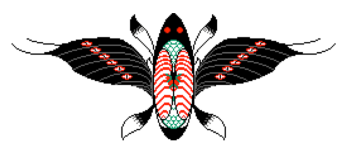
Another reason why “taking Airbus to Mordor” never was an option: the Mordor Special Mission Flying Corps. This is Tolkien’s sketch of the MSMFC logo, presumably their shoulder patch (from Tolkien: Artist and Illustrator):
MordorFlyingCorps.png
 

Attachments

  • MordorFlyingCorps.png
    MordorFlyingCorps.png
    26.1 KB · Views: 49
That I think is the point. In Croatia, we have a saying, "Help yourself first, and then God will help you". Basically, if you want a wonder, you have to work for it. Eagles seem to be in that vein: they reduce the losses from the victory, but they only appear once victory had been achieved.
I also remember one similar saying, though I don't know the source: advice of what to do if out on a lake when a storm comes up: "Pray if you like, but row for shore."
But as to when the Eagles appear, Aldarion: they do appear in each case before victory is assured.

Eärendil and "all the great birds of heaven and Thorondor was their captain" appear together to counter Ancalagon and his winged dragon host, but still "there was battle in the air all the day and through a dark night of doubt" until Eärendil trashed Ancalagon (and Thangorodrim).

In TH, the Eagles appear before Beorn, stemming the tide of the Orcs and Wargs a bit, but Beorn finally tipped the scales.

And before the Black Gate, the Eagles also took on the bad guys' "air force": "Straight down upon the [eight remaining] Nazgûl they bore, stooping suddenly out of the high airs … But the Nazgûl turned and fled, and vanished into Mordor's shadows, hearing a sudden terrible call out of the Dark Tower ...", and then the One Ring drops into the Cracks of Doom.
 
Can we agree that I can respectfully disagree with some of you? Call me a troublemaker, but one that at least peppers the sauce...!

Eagles, in many mythologies and in Tolkien’s stories, metaphorically represent the moment when the struggling soul is transformed and raised up by some great act of courage, sacrifice, or heroism. (This is, incidentally, why the Fellowship couldn’t possibly just fly the eagles to Mordor. The eagles only ever appear when the soul has extended itself to the utmost, poured itself out, or reached the point at which there is no more physical escape: suddenly, in agony and ecstasy, the soul is transfigured and raised beyond the heights of the material world. So no, just sitting around waiting on the eagles to function as literal transportation across Middle-earth doesn’t work, won’t ever work.

Nothing that I know in JRRT's writings justifies this opinion. Was JRRT ever spiritual about eagles? I don't follow that.

By the time of the War of the Ring the mighty Eagles of the First Age had dwindled in importance and involvement in the ways of Middle-earth [...] so for the Eagles to take such a prominent place as taking the One Ring directly to Mordor, much less to the Cracks of Doom on Orodruin, would be at the very least an attempt to turn the clock back a full Age or two.

I think that this opinion goes against some book-facts; by the time of the WR the eagles were "busier than badgers", as Sam would put it:

  1. The eagles saved Bilbo, Gandalf, Thorin and his company from the wolves and goblins.
  2. The eagles carried out "in great numbers" a strategically important strike at the Battle of the 5 Armees ("The eagles were coming down the wind, line after line, in such a host as must have gathered from all the eyries of the North.").
  3. The eagles spied out the area between the Misty Mountains and the Grey Mountains upon Radagast's request, and reported back on their observations: "Radagast knew no reason why he should not do as I asked; and he rode away towards Mirkwood where he had many friends of old. And the Eagles of the Mountains went far and wide, and they saw many things: the gathering of wolves and the mustering of Orcs; and the Nine Riders going hither and thither in the lands; and they heard news of the escape of Gollum.".
  4. The eagle that came to Gandalf in Orcrist was serving as a helping messenger.
  5. That eagle also rescued Gandalf: from captivity - not from impending death.
  6. The eagles helped Elrond i.a. by trying to find Gollum after his escape from Thranduil's realm: "Even from the Eagles of the Misty Mountains they [= the messengers] had learned no fresh news. Nothing had been seen or heard of Gollum; but the wild wolves were still gathering, and were hunting again far up the Great River". Gandalf confirmed their help: “The Eagles report that Orcs are gathering again from afar; but there is a hope that Moria is still free."
  7. The eagles carried out another massive strike at the very gates of Mordor: "Behind them in long swift lines came all their vassals from the northern mountains, speeding on a gathering wind".
1. The Eagles are always late arrivals at the scene of battle, and while they do even things out somewhat, sometimes more, sometimes less ...
2. They are never the decisive intervention.

they only appear once victory had been achieved.

See previous points 3 to 6: they clearly did quite a lot more than that.

So, if the eagles helped Bilbo, Thorin, Gandalf, Elrond, Radagast, plus elves, men and dwarves at various battles, then why did they not help Frodo?

My own conclusion ... is that there is no conclusion; JRRT never explained this giant plot hole. All that I could find is a meek statement (taking it a bit out of context from letter 210): "The Eagles are a dangerous 'machine'. I have used them sparingly, and that is the absolute limit of their credibility or usefulness".

I have grudgingly made my peace with this imperfection. For an imperfection it is: in my opinion the pro's and the con's of the eagle option should at least have been deliberated at the council of Elrond, just like all the other options. But, all said, must an author be perfect before we can admire him…?
 
Nothing that I know in JRRT's writings justifies this opinion. Was JRRT ever spiritual about eagles? I don't follow that.

He was spiritual about more or less everything. Even the trip to Mount Doom is symbolic, as is Gandalf's death and subsequent rebirth.

See previous points 3 to 6: they clearly did quite a lot more than that.

So, if the eagles helped Bilbo, Thorin, Gandalf, Elrond, Radagast, plus elves, men and dwarves at various battles, then why did they not help Frodo?

My own conclusion ... is that there is no conclusion; JRRT never explained this giant plot hole. All that I could find is a meek statement (taking it a bit out of context from letter 210): "The Eagles are a dangerous 'machine'. I have used them sparingly, and that is the absolute limit of their credibility or usefulness".

I have grudgingly made my peace with this imperfection. For an imperfection it is: in my opinion the pro's and the con's of the eagle option should at least have been deliberated at the council of Elrond, just like all the other options. But, all said, must an author be perfect before we can admire him…?

But points 3 to 6 all relate to information gathering; rescue of Gandalf was not planned. Which would fit if there is in fact some external limit to their involvement. Remember that Eagles serve as Manwe's messangers, so it might be that that is their "normal" limit.
 
There is an essay, “Of Ents and Eagles”, referenced in War of the Jewels. It was alternately titled either Anaxartamel or Anaxartaron Onyalië. In the short, two-page description by CJRT, the published material discusses only Ents.

I do seem to recall some discussion by Tolkien of eagles as a (potentially) dangerous [literary] device, or words to that effect, but cannot find it this morning.
 
1. The Eagles are always late arrivals at the scene of battle, and while they do even things out somewhat, sometimes more, sometimes less ...
2. They are never the decisive intervention.

  1. The eagles carried out another massive strike at the very gates of Mordor: "Behind them in long swift lines came all their vassals from the northern mountains, speeding on a gathering wind".

Yes, when the host of the west was already surrounded by Mordor's forces on the two slag heaps on which the former had gathered their defensive positions.
Gollum was decisive. Like Eärendil before Thangorodrim / Angband, and Beorn in the Battle of Five armies. 😛
 

Today's events

Similar threads

Back
Top