• Welcome to The Tolkien Forum! Connect with fellow Tolkien enthusiasts and join a community that is over two decades old, and still going strong. We look forward to meeting you.  Register

How was Minas Morgul destroyed?

Aldarion

Active Member
Joined
May 30, 2019
Messages
982
In Return of the King, Aragorn says that Minas Ithil was to be destroyed. But Minas Ithil was sister city of Minas Anor. This means that it would likely have similar fortifications - and the main wall of Minas Tirith was basically indestructible. Does this mean main wall of Minas Ithil will have survived the said destruction, or Minas Ithil didn't have the same wall as Minas Tirith did?
 
In Return of the King, Aragorn says that Minas Ithil was to be destroyed. But Minas Ithil was sister city of Minas Anor. This means that it would likely have similar fortifications - and the main wall of Minas Tirith was basically indestructible. Does this mean main wall of Minas Ithil will have survived the said destruction, or Minas Ithil didn't have the same wall as Minas Tirith did?
It's possible. I don't remember them describing the outer wall as being the same as Minas Anor, however. The rest of the fortress could be destroyed and the fields of corpse flowers can be burned.
 
Neither Orthanc nor Minas Tirith's main wall had anything to do with Rings of Power.

Unless you mean that magic in general gradually left the world?
I may have been hasty with my previous post. I'd need to find the quotes that speak to the indestructibility of the wall of Minas Tirith and of Orthanc itself. I'm thinking that if the King ordered a new tunnel to be chiseled through the wall of Minas Tirith, the Stone Masons would find a way to get it done. But, maybe I'm wrong and the task would be beyond their skill.

In my post, I was primarily thinking that Sauron's power would have prevented any stone mason's tool from making even a chip into the structures of Minas Morgul. Of course, these are just my imaginings.
 
I may have been hasty with my previous post. I'd need to find the quotes that speak to the indestructibility of the wall of Minas Tirith and of Orthanc itself.
They are right in the Lord of the Rings. But basically, in TTT Ents utterly failed at damaging Orthanc despite being able to crush normal rock in a matter of seconds, and in RotK we learn that the main wall of Minas Tirith was built the same way and was indestructable "save perhaps with an earthquake that would destroy the very ground it sat upon" (paraphrased quote from memory). Hence why the Witch King focused on the gate.
 
Ents utterly failed at damaging Orthanc
I see your point. However, not quite "utterly failed":

'The many faces of the stone had sharp edges as though they had been newly chiselled. A few scorings, and small flake-like splinters near the base, were all the marks that it bore of the fury of the Ents.'

So, by my thinking, this text is evidence that Orthanc is not indestructible (just very very hard to destroy). Could a stone mason with steel tools and lots of time do more damage than an Ent? I don't know, but I'm thinking maybe he could.
 
I see your point. However, not quite "utterly failed":

'The many faces of the stone had sharp edges as though they had been newly chiselled. A few scorings, and small flake-like splinters near the base, were all the marks that it bore of the fury of the Ents.'

So, by my thinking, this text is evidence that Orthanc is not indestructible (just very very hard to destroy). Could a stone mason with steel tools and lots of time do more damage than an Ent? I don't know, but I'm thinking maybe he could.
True. And an army of dwarven masons with several centuries of time could probably bring down Orthanc. But consider this:
‘When Treebeard had got a few arrows in him, he began to warm up, to get positively ‘‘hasty’’, as he would say. He let out a great hoom-hom, and a dozen more Ents came striding up. An angry Ent is terrifying. Their fingers, and their toes, just freeze on to rock; and they tear it up like bread-crust. It was like watching the work of great tree-roots in a hundred years, all packed into a few moments.
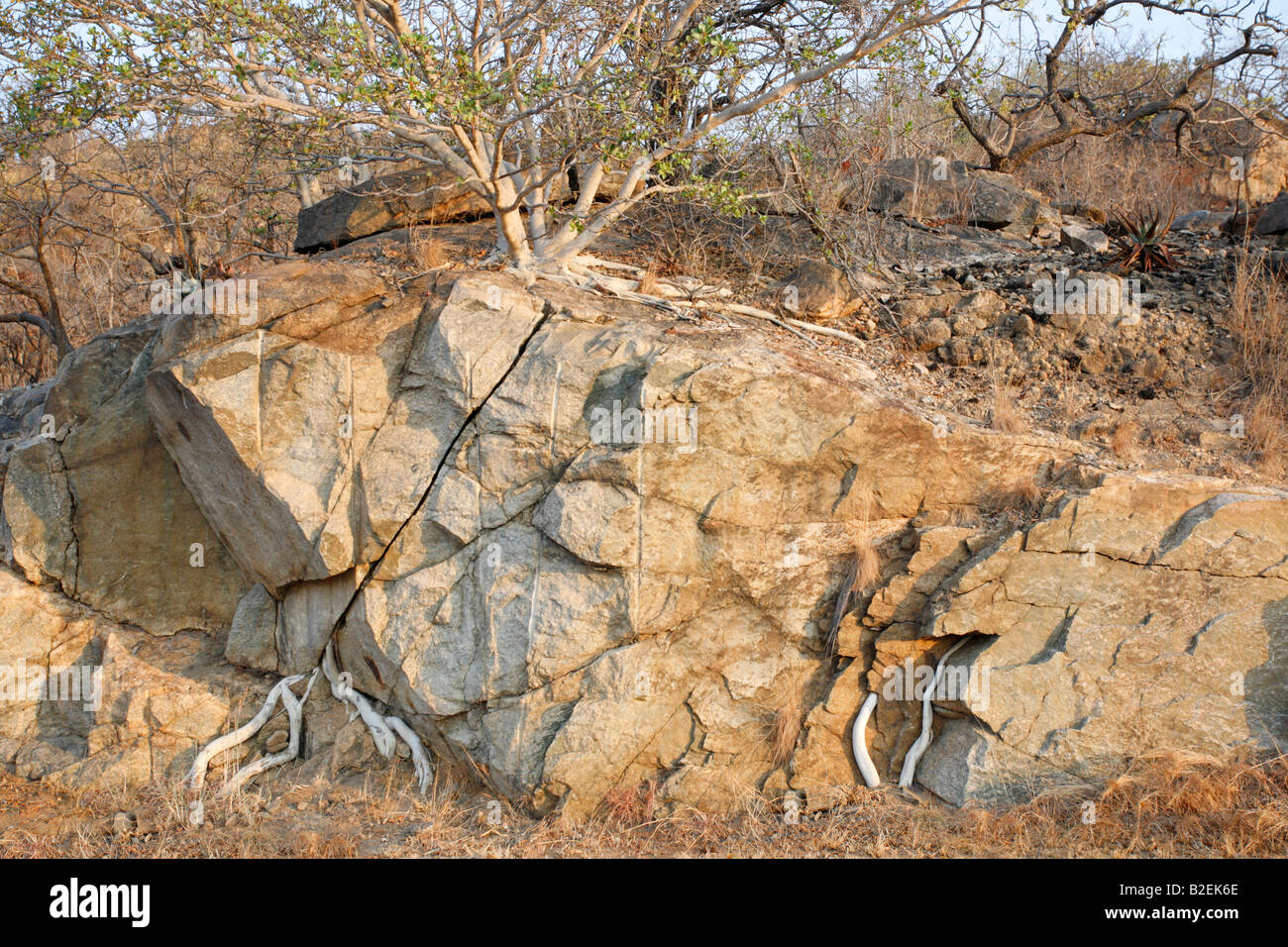
Now consider what roots of a tree can do to a stone:
birch-roots-sprouted-stone-split-boulder-summer-landscape-altai-mountains-russia-concept-survival-adverse-128625897.jpg

the-roots-of-a-rock-fig-splitting-rocks-with-roots-appearing-from-B2EK6E.jpg

So not indestructible - nothing is - but certainly resillient enough to make it practically indestructible with anything known in Middle Earth.
 
True. And an army of dwarven masons with several centuries of time could probably bring down Orthanc. But consider this:

Now consider what roots of a tree can do to a stone:
birch-roots-sprouted-stone-split-boulder-summer-landscape-altai-mountains-russia-concept-survival-adverse-128625897.jpg

the-roots-of-a-rock-fig-splitting-rocks-with-roots-appearing-from-B2EK6E.jpg

So not indestructible - nothing is - but certainly resillient enough to make it practically indestructible with anything known in Middle Earth.
Good points. And, very cool photos!
 
True. And an army of dwarven masons with several centuries of time could probably bring down Orthanc. But consider this:

Now consider what roots of a tree can do to a stone:
birch-roots-sprouted-stone-split-boulder-summer-landscape-altai-mountains-russia-concept-survival-adverse-128625897.jpg

the-roots-of-a-rock-fig-splitting-rocks-with-roots-appearing-from-B2EK6E.jpg

So not indestructible - nothing is - but certainly resillient enough to make it practically indestructible with anything known in Middle Earth.
That is amazing... I've read about tree roots doing that but have never seen the real thing ...just amazing.
 
I'm going to guess that Elessar sent out messenger riders to Fangorn Forest bearing a Royal communique (rolled parchment in a purple ribbon, emblazoned with the White Tree coat of arms, guilt lettering, archaic wording, etc) to Treebeard, inviting him to trek on over to Minas Tirith (and to bring his friends Bregalad/Quickbeam, Finglas and Fladrif, and maybe a few dozen huorns) then on to the erstwhile Morgul Vale to participate in a ginormous bust-up of Minas Morgul.
And a good time was had by all. 😁
 
Last edited:
I'm going to guess that Elessar sent out messenger riders to Fangorn Forest bearing a Royal communique (rolled parchment in a purple ribbon, emblazoned with the White Tree coat of arms, guilt lettering, archaic wording, etc) to Treebeard, inviting him to trek on over to Minas Tirith (and to bring his friends Bregalad/Quickbeam, Finglas and Fladrif, and maybe a few dozen huorns) then on to the erstwhile Morgul Vale to participate in a ginormous bust-up of Minas Morgul.
And a good time was had by all. 😁
Maybe Gandalf fished some gunpowder out of Orthanc and just blew it up.
 
Like most things in Middle-earth that differs from our world, the Stone itself has what Tolkien defined as constituent “Materials” (Nassër) that are derived from the “Prime Matter” (Erma) of the Universe (Eä).

And that the Nassër have constituent components of both Hröar and Fëar (Physical “Matter”/Materials and Spiritual/Soul “Matter”/Materials).

Matter and Materials are the same root, where in our Universe “Matter” tends to be the Bartyonic Matter of “Molecules” and the constituent other “Particles” that we can basically “Catch with the equivalent of a “hand,” where the “hand” is often a technological device we created to perform the same function with Micro-, Nano-, and Peta-scale “stuff” as we use our “hands” for with what is called “Meso-Scale” ”Matter.” This would include “Dark Matter.” It basically refers to anything that is not ”Electromagnetic Radiation.”

”Matter” tends to be thought of as “Distinct” from “Energy,” even though this distinction is somewhat arbitrary given the nature of Matter and Energy (e = mc²) being “intertwined” or an “Identity” of Energy and Mass that is “Potentiated” in some fashion (Size, Speed, Relationship to other Masses, and other “Relative” things producing gradients/differentials).

But when we get into Eä, and thus Arda, a new or “Different” Metaphysics (The Rules out of which “Physics” emerges — or “The Rules that create the Rules of the Universe”).

Karl Hostetter’s The Nature of Middle-earth outlines the specific distinction of Eä, and thus Arda, and thus Middle-earth, within each, respectively:

The Nature of Middle-Earth, Part Two: Body, Mind, and Spirit, Introduction. p.172:
As Tolkien famously said, “The Lord of the Rings is of course a fundamentally religious and Catholic work” (L:172), a statement that has puzzled many critics, because both The Lord of the Rings and Tolkien’s wider legendarium are all but devoid of references to any religious cultus (let alone a Catholic system of rites and worship). As I hope the texts presented here will show, the key word in Tolkien’s statement, often ignored as simply emphatic, is fundamentally: that is, in its foundations, in its essential nature. In these particular texts, this is most clearly seen in Tolkien’s implied commitment to hylomorphism:, that is, the Aristotelean-Thomistic teaching that all material things are ultimately a union of created but undifferentiated prime matter (in Quenya, erma) with a God-given form (in Tolkien’s parlance here, pattern, that which gives each portion of erma the nature and shape of the thing that it is).

As such, the Stone that is Orthanc, and the lowest wall of Minas Tirith has Components/Materials (Nassër) that are BOTH Hröar (Molecular Matter, or what we call “Baryonic Matter,” comprising the Periodic Table of Elements that combine to make different “Stuff” that we call Minerals, Metals, Compounds, Organic Matter, etc.) AND Fëar (and here we get into a debate that has been raging in Religious Theology for Centuries: Is the “Soul” made of Some-Thing,. And thus is a “Material”/Nassër” as Tolkien puts it, which would be made of something akin to the Periodic Table of Fëar-Elements, as opposed to the Periodic Table of Hröar-Elements. Karl Popper, the Father of Modern Science said “Either the Soul is composed of materials that are Some-thing, OR IT IS Made of NO-THING: I.e. Nothing, and thus does not exist!” Popper is by far the only Scientists who has pointed this out, and Metaphysicians, Theologians, and Philosophers for Thousands of years have been arguing the same points).

Popper himself was pretty religious, but admitted that to date all Falsifiable tests for a “Soul” had failed (i.e. the Hypothesis was Falsified, meaning the conclusions of the Existence of “Soul-Stuff” via that Hypothesis is False), and was pretty despondent over that, and over the Religious attitude of making claims about the Soul that were non-Falsifiable.

But we don’t need to worry about the debate over whether a “Soul” exist in Middle-earth, Arda, and the Universe containing them: Eä.

The quote from Tolkien given us by Hostetter makes it perfectly clear such a thing does exist, and that it exists with “Fëar-Nassër” (Materials that compose the Soul/Spirit/Mind that are distinct from those of the “Body”/Hröa).

The Stone that makes up Orthanc or the Lowest Wall of Minas Tirith is either Chondritic Mantle Material (a Silicate-Boron high in Nitrate contents), or a Boron-Nitrate Crystal that is harder than Diamonds. Most likely the Wurtzite Boron Nitride:

https://en.wikipedia.org/wiki/Boron_nitride

BUT!

It contains that Fëar-Stuff
/Nassër, that is malleable to Enchantment, or to the Imposition of Will that is “Magic” (Sorcery, Necromancy, The Occult, Satanism) within Middle-earth.

The Faithful of the Númenóreans, like the Elves, would not have messed with the Necromantic “Magic” that is a Tool of The Enemy/Shadow, but Enchantment was and is their stock in trade.

Enchantment differs from Magic in that Enchantment isn’t producing “Unnatural Effects“ that result from imposing ones Will (Indo) upon the Nassër (Hröar or Fëar) of Middle-earth. Instead it produces or draws-out Natural Properties inherent in the Nassër (Fëar and/or Hröar), producing something like Ithildin, or the Stone of Orthanc and the Lowest Wall of Minas Tirith.

This means that it can be “un-done” via a similar method, or via a method “Baked in” to the original Enchantment. A sort of “key” To the Enchanting that allows the material to be modified to produce the shapes we see in Orthanc and the Lowest Wall of Minas Tirith to begin with.

If the material was “Wholly Impervious” that means it could not have been “Shaped” to begin with, and its “Imperviousness” is a quality it gained after being shaped, or the “imperviousness” can be penetrated via this “Key” to the Enchantment.

All of this gets into some hairy and strange, arcane subjects from Theology, the Occult, Philosophy, Linguistics/Philology, and so on, where Tolkien himself was submerged in these subjects over his entire life.

But he saw “Enchantment” as a “loophole” to the Religious/Christian condemnation of “Magic” and “The Occult” (and the Specific Thomist Theology that all Magic is Necromantic, which goes further than the previous Christian determination that All Magic is Satanic), as “Enchantment” (which has to do with “Voice,” “Song,” “Attraction”/Charm, etc. and not with the Brutal “Imposition of one’s Will upon the Universe to alter it in defiance of ‘What is Natural‘.”) is about “drawing out the Natural Qualities of the Universe that are usually Hidden.”

A Subtle but Critical Distinction!


Given Tolkien’s affinity for making Aragorn the “Manifestation of the True Númenórean,” which is itself a Humanity closest to being Elven as can exist within Arda (and possibly Eä), it would not be terribly surprising for Aragorn to be able to find the “Key” to the Enchantment of any Nassër (Fëar or Hröar) used in the construction of Minas Ithil, or of any “Magic” in its modification by Sauron or the Witch-King, that would allow it to be “un-done” without resorting to unnatural or destructive methods (destructive to the Surroundings).

MB
 
My feeling is that with the fall of Barad-dur there was no longer any stone in Middle-earth that was immune to the stonecutters' tools.
Barad-dûr has no connection to anything in Middle-earth save the Ring-of-Power that created it in terms of the effects of the Nassër of Middle-earth as a whole.

The Destruction of The Ruling Ring-of-Power did nothing but undo the Power/Authority of the Rings-of-Power. The Foundations of Barad-dûr were held together by that Power. Much like the Ring-of-Power kept the Nazgûl alive unnaturally long, causing their Hröar to be “consumed” by the Fëar (same thing that happens to Elves who remain in Middle-earth too long, that Tolkien refers to as “Fading” — Anything living beyond its natural span of “Life” will have that problem. But the Númenórean Blade Merry Stabbed the Witch-King with disconnected that “Power”/Spell/Magic, causing the Body to be vulnerable to ”Éowyn’s Swordi In His Face.”). The Foundations of Barad-dûr were not connected to the rest of the Stone Nassër in Middle-earth, and that Nassër remained unchanged when The Ruling Ring was destroyed.

And even after the Fall of Barad-dûr, Enchantment of the Fëar or Hröar stuff/Nassër remained possible to any who knew the methods and who possessed the Fëar required to Enchant such things.

Meaning other things like the Stone of Orthanc or the Lowest Wall of Minas Tirith could be “Created/Made” in kind.

MB
 
(Just for fun) It coulda happened this way:

The dwarves of Erebor and the Iron Mountains answered King Elessar’s call to begin the arduous task of demolishing the evil city, Minas Morgul. When the preparations were made, seven score dwarves laden with hammers, crowbars, and pickaxes, all the varied and hardy tools needed for the task at hand marched forth. At the Morgul Gate the company halted awaiting the striking of the first ceremonial blow. This honour was allotted to Gimli, Gloin’s son. He raised his stout hammer of iron high above his head and brought its weight to bear upon the accursed threshold. But then, something unexpected happened: from the point of impact cracks propagated outward from stone to stone, up the walls, from building to building even to the heights of the Evil Tower. The company retreated back across the bridge and turned in time to see the entire city crumble and fall to dust.

As the dust cloud cleared Gimli with a prideful grin turned and gazed at the company who stood gaping in amaze at the sight they’d just seen. They erupted into cheers praising the mightiest hammer stroke ever struck by any of Durin’s folk. He knew his place was now affixed forever in history. Songs would be sung for years uncounted of the mighty hammer stroke of Gimli, Son of Gloin; the single stroke that laid waste to a city.

In the midst of the celebration Gimli saw one of his company standing nearby with a look of indifference on his face. And, with a rather annoying smirk he looked at Gimli and said: "That still only counts as one."
 
Last edited:
But then, something unexpected happened: from the point of impact cracks propagated outward from stone to stone, up the walls, from building to building even to the heights of the Evil Tower. The company retreated back across the bridge and turned in time to see the entire city crumble and fall to dust.
Sounds like something Scrat from the "Ice Age" animated franchise would be able to do routinely. 😁
 

Today's events

Back
Top