I’m just passing through today, but this caught my eye as I was preparing to post on
another thread that appeared in the
Tolkien Monthly Newsletter. (Brilliant, that newsletter!)
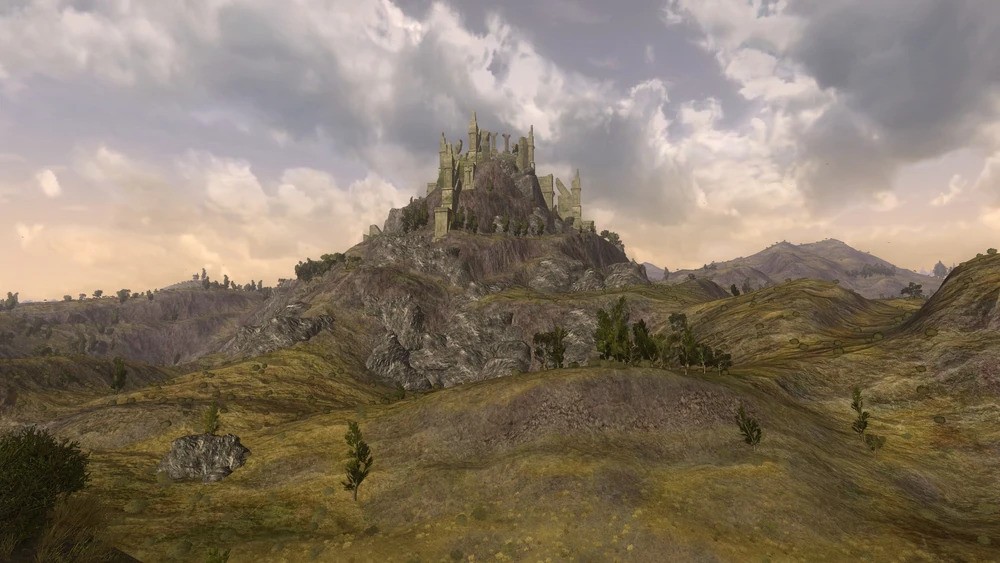
The Stone of Erech was indeed in the drafts supposed to be a
palantír. As the story was rewritten, however, it became “merely” a large stone brought by
Isildur from
Númenor; exactly how large was in fact
the first thread in which I posted at TTF many years ago.
After many years of reflection (which is no reflection on anyone whose time of reflection on the subject is shorter or longer), Tolkien describes the stone as “the height of a man, though its half was buried in the ground.” That would indicate that 6 or more feet tall: in
Unfinished Tales in the section on “
Númenórean Linear Measures”, Tolkien says the Dúnedain considered “man-high” to be two
rangar, which works out to be six feet four inches in Imperial (and American) measure. So the thing was huge – and heavy!
That brings us to the discussion in this thread between Squint-eyed Southerner and JPMaximilian (a belated welcome to you, JPMaximilian) about why anyone would bother hauling such a large artifact in such difficult conditions so far inland. Consider:
- the Stone unquestionably came to Middle-earth from Númenor;
- because it was at least 12, maybe 13 feet (3½–4 meters) in diameter, it was extremely large, heavy, and cumbersome for transport by ship;
- the Faithful who were fleeing Númenor were in the harbor of Rómenna essentially under siege after being driven from their homes, mostly in western Númenor;
- getting things aboard ship might have required smuggling; and besides
- Isildur was being hunted for stealing a fruit of Nimloth, the White Tree of Númenor, was terribly wounded, and though they might not have known who stole the fruit, all the Faithful, especially members of Elendil’s household, were suspect.
So what could be the origin of the Black Stone of Erech?
I have two propositions that I will offer today; others may come to mind as you ponder the questions yourselves.
- The Stone might be from Meneltarma. Meneltarma is unquestionably a volcano, and volcanoes are the source of obsidian, a volcanic glass that is often deep black in color. Meneltarma was also the “holy mountain” of Númenor and the only site of the public worship of Eru in the history of the Dúnedain: that would make it worth the effort and risk of transporting it to Middle-earth, particularly if the stone was originally from the hallowed summit of the mountain.
- The stone might be a gift of the Eldar to the Dúnedain brought from the Uttermost West. Its exact origins are perhaps buried deep in Time, and lost or forgotten by the Dúnedain of the late Third Age. In any event, it was likely from Valinor itself (unless Tol Eressëa was also volcanic), and so hallowed by its origin. Again, this would explain the effort and risk the Númenórean Faithful took in its transport to Middle-earth.
Both of those explanations also provide a “reason” for the sacred nature of any oath taken on the stone, and why such an oath would be binding.
As for why the thing was brought so far inland, I suggest that, like Elendil’s tomb on the north side of the
White Mountains, it was very nearly the center of the original kingdom of
Gondor.
As for “relics in Middle-earth”, I think the Barrow-swords, though made in Middle-earth during the second millennium of
the Third Age, certainly qualify. The palantíri, of immense age, do, too. There is also the
sword Narsil, reforged as
Andúril; the
Ring of Barahir, given to him by
Finrod, made in Eldamar in the distant past, given to
Arwen by
Aragorn as a sign of their betrothal (an engagement ring, if you will); the library in
Minas Tirith, including the scroll of Isildur and probably
books and scrolls written in Númenor;
the Rings of Power, even shorn of their properties after the destruction of
the One Ring (if any survived the ruin of
Barad-dûr); and the Sceptre of Annúminas, which Appendix A describes as “perhaps the most ancient work of
Men’s hands now preserved in Middle-earth.” To this we can add both Elendilmir,
the one Aragorn wore at his coronation, and the one Isildur lost that
Saruman discovered and hid, a thing of immense beauty and age; the sword
Orcrist, which remained in the
Lonely Mountain; the short sword (or long dagger)
Sting, which can be argued to have been left with
Sam when
Frodo departed; the Elven-cloaks of
Lórien, as well as the boats, which remained one on
the east shore and one on the west shore of Nen Hithoel; and we could go on.