Note on words like “Muck” and “Filth.”
I did not see if this has been addressed, but these words were polite terms for poop in the Early and Pre-20th Century Anglophone Societies.
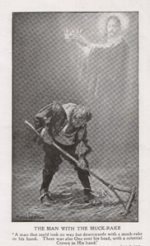
A “Muck-raker” rakes up
Horse and Cow poop, and sometimes even the Human Variety if the place of the “Muckraker’s employ” happens to have “outdoor facilities” that have no flow of water.
The Romans and SOME Saxon Homes that used a Roman plan for such things, would have the “Toilet areas” set-up over a small stream that ran to a swamp that most villages liked to have nearby. Swamps are EXCELLENT at “cleaning water.” And the arrangement allowed for the creation of potent fertilizer from all village waste that tended to flow down to the swamp.
I need to ask a friend who is soon to be starting her Graduate Work on Medieval Clothing and Textiles about this, as I recall discussing the “Town Swamp” with her, but it even has a specific name, that might be derived from Latin or Greek. In some cases the “swamp” was simply the edge of a nearby river, where the “banks” weren’t too ‘specific,’ save at fords or in tended pastures or meadows. They tended to been filled With reeds, thrushes, water-lillies, and other aquatic
plants, and no small number of funguses, including moss, lichens, and the famous mushrooms, which grow best in “muck” or “filth” (the modern grower of such fungi will be well-aware of where such fungi are best found, among the “muck” and “filth” of “cow Pastures, and thus the domestication of the products would grow best in a similar medium).
One wonders about Farmer Maggott in that regard. Was his name also an indication of his horticultural predilections regarding Mushrooms? As “Maggotts” tend to be prolific in such fungi-beds, and are usually chopped back into the “soil” (another word that can have an identical meaning as “muck” and “Filth” depending upon
where and when this “soil” is referenced) to provide greater nutrients for the Mushrooms (and to keep them from EATING the Mushrooms).
Tolkien tended to shy away from mentioning anything that might give away an explicit indication that he was talking about poop when using such words. So mentioning the “smell” of it would likely only come-up if dealing with
Orcs or others fallen under
the Shadow. But the selection of the name Maggott, aside from other etymological associations, such as its proximity to the word “Mathom” with its Saxon form “
*Matho(n)”. As a name, it comes from the diminutive “Margot” or “Maggo(t).” But those two have some sideways association(s) with “Muck” and “Filth” in the form of meaning “Sick/Nauseating” (Mawke-ish) and “irritating/distracting” or “sickening sentimentality.”
In “Polite Society” there are all manner of such terms where there are sideways references to things that are “just not discussed.” Many of these make for means of insulting or belittling others, and are similarly obscure.
MB
Edit: “Lath-“ is a different form of “ill” than “Muck” or “Filth.” It would be closer to “Vomit” than the referent to “Muck” and “Filth.”
But more properly “Lath-“ is from “Læððe” or “Laþþ,” and if with that last example, you do not think of “lapping” as a nautical timber, then you will likely miss the reference to what the “Læððe/Lath-“ are: They tend to be the small lapping-boards underneath the plaster that used to be an inside wall (wattle is sometimes used instead of the more expensive plaster), and were also synonymous with “Complex and Complicated” or “Weaving” and “Convoluted” as well as “Concealing.”
ALL things
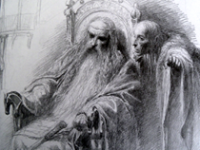
Wormtongue was known for: Obfuscating, Muddying the waters, Prevarication behind complex and complicated Truth, etc. And “-Spell” is “News” so wormtongue is saying “Ill-News” in an ironic self-accusation.
THAT IS SO Tolkien to put the words of a person’s own Failings and Failures into their accusations of others. Wormtongue is so quick to accuse
Gandalf of being “Ill-News” that he uses a term that means not just “Ill-News” but “Speaking badly/wrongly/deceptively.”




 . It has grown back now; my brother lives nearby and has sent family photos taken in


